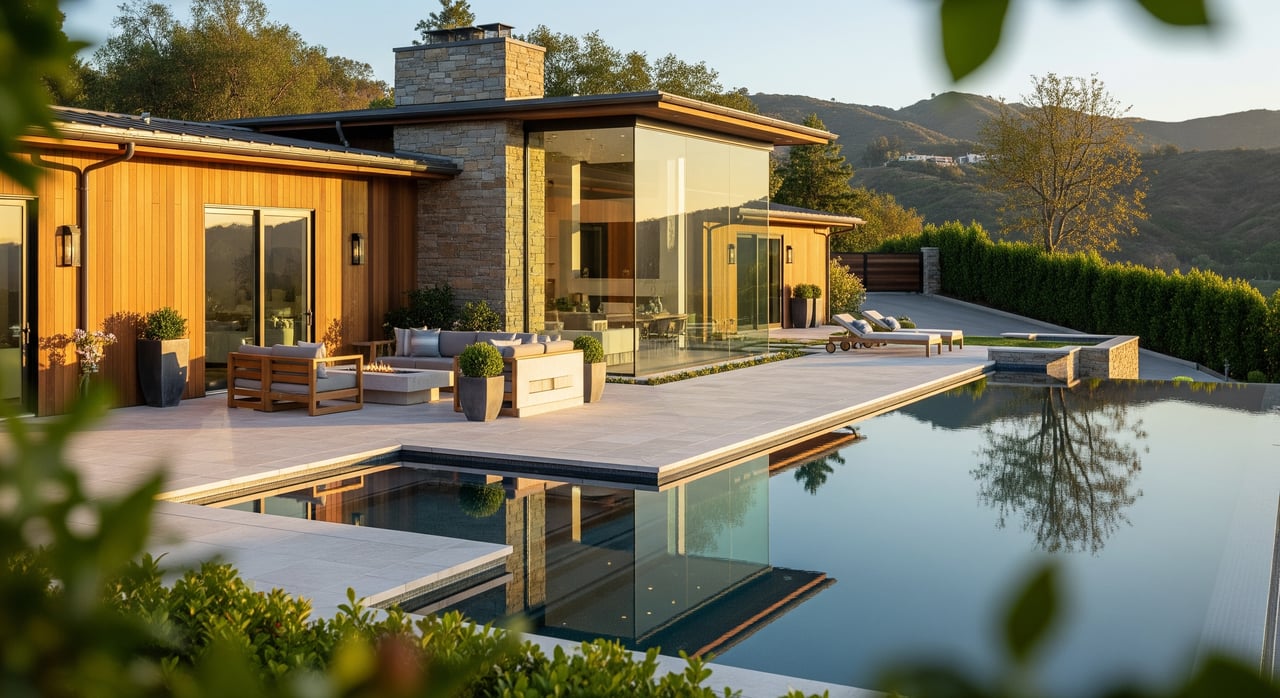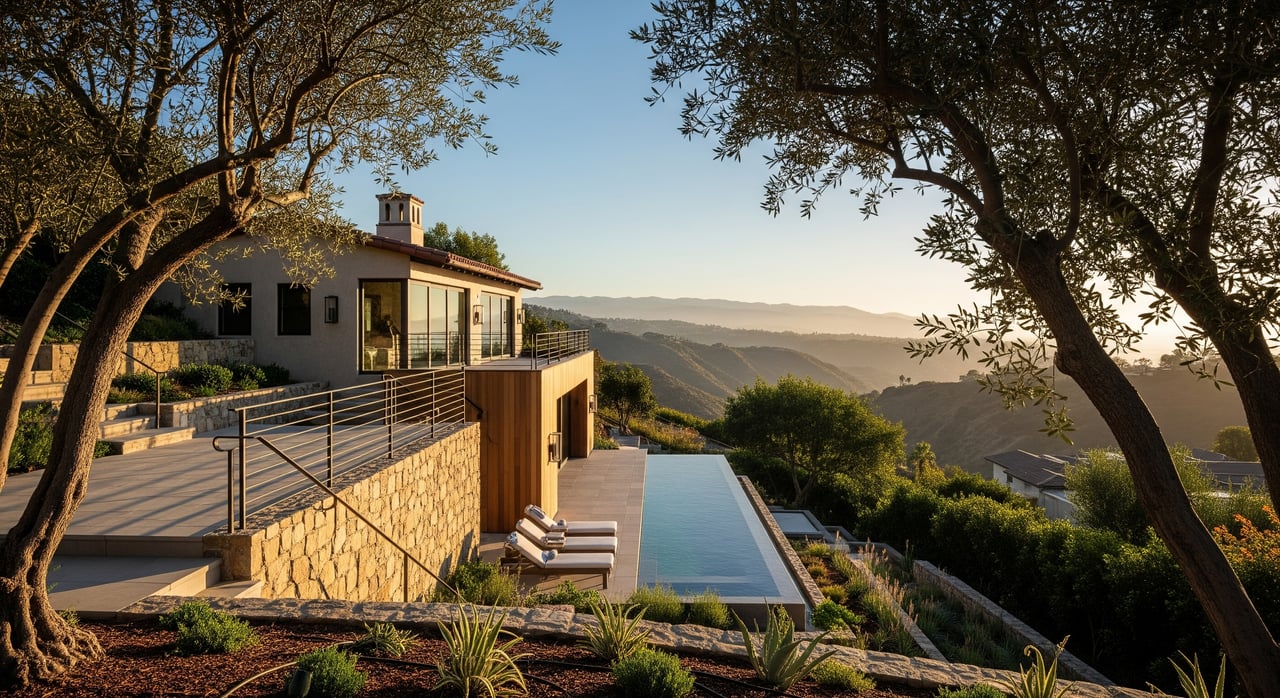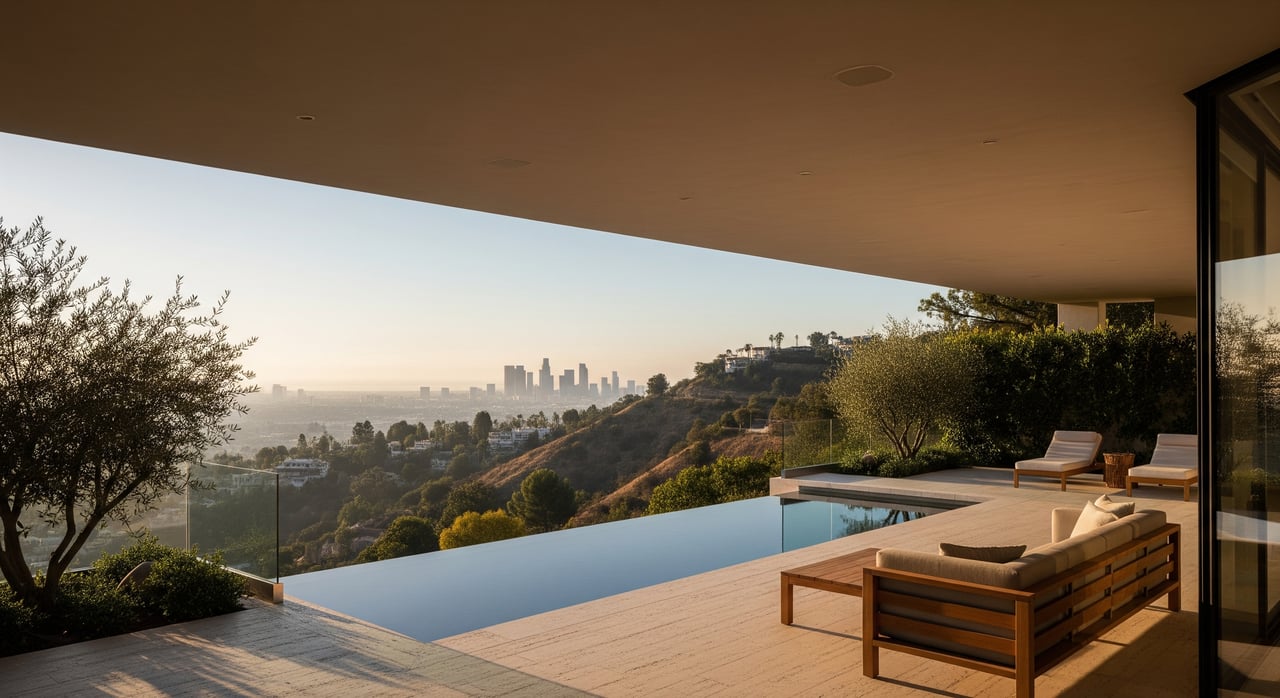
If you can see the city sparkle or a slice of the Pacific from your living room, the next question is simple: how much is that view worth? In the Hollywood Hills, views can move prices, but not all views are valued the same. You want clarity before you list, buy, or invest so you can make smart decisions with confidence. In this guide, you’ll learn how appraisers measure and document view premiums, what drives value up or down, and how to prepare for an appraisal or negotiation. Let’s dive in.
Why views carry real value in the Hollywood Hills
Hollywood Hills homes sit above the Los Angeles Basin with natural vantage points over canyons, skyline, and distant ocean. Those sightlines are scarce because orientation, topography, and hillside development limits reduce supply. That scarcity supports premiums when buyers prioritize views.
The premium itself is highly variable. Market-supported adjustments often range from low single-digit percentages to the high teens, and occasionally higher for rare 180- to 360-degree panoramic or ocean views. The exact number depends on the quality of the view, proof from comparable sales, and current market conditions in the Los Angeles–Long Beach–Glendale metro.
Costs and risks tied to hillside living can offset what a view adds. Slope stability and geotechnical work, higher wildfire risk and insurance in some pockets, and access or parking limitations can temper premiums. Appraisers weigh both the emotional pull of a view and the practical realities of owning on a hillside.
How appraisers measure a view
Define the view
Appraisers start by describing the view precisely. They identify the type (city lights, skyline, canyon, distant ocean), the orientation, whether it is partial or panoramic, and how likely it is to remain open in the future. The permanence of a view often matters as much as its wow factor.
Where the view is enjoyed
Views seen from primary living spaces carry more weight than views tucked into a secondary room. Appraisers note what you can see from the living room, kitchen, and primary bedroom, and from outdoor areas like terraces and pools. A sweeping vista from an entertaining terrace often brings a stronger premium than a narrow corridor view from one window.
Width, framing, and distance
The wider and more unobstructed the scene, the greater the potential premium. Appraisers consider whether the view is panoramic or narrow, whether it is framed by landscaping or structures, and whether the focal points are near or distant. City light “sparkle” at night is documented separately because evening appeal can be a distinct driver for buyers.
Permanence and privacy
Two questions matter: Will this view be blocked by future development or vegetation, and can you enjoy it privately? Appraisers look for any recorded view easements or planning context that supports permanence. They also weigh privacy and noise, since highly visible patios or nearby traffic can reduce desirability.
Documenting the view
Good reports include field notes and photos taken during the day and at dusk to capture city lights. Clear photo documentation from key rooms and outdoor spaces helps underwriters understand the appraiser’s adjustments and makes the valuation more defensible.
Turning views into numbers
Sales comparison first
For residential property, the sales comparison approach is primary. The appraiser selects recent sales that match the subject’s location, size, quality, and most importantly, view type and quality. That comp set anchors any view-related adjustments.
Paired-sales analysis
Matched pairs are the gold standard when available. The appraiser finds two very similar sales where the major difference is the view. The price gap between those sales is used to estimate a market-supported adjustment for the subject.
Expressing the adjustment
Adjustments can be shown as a flat dollar amount, a percentage of value, or sometimes a $ per square foot figure. The format depends on the quality of market evidence. What matters is that the adjustment is supported by local sales and explained clearly.
When data is thin
In unique hillside pockets, perfectly matched comps may be scarce. Appraisers may expand the search radius within the same buyer pool and reconcile a supported range rather than a single number. Regression analysis may be used if there is enough data with varying view qualities to reveal patterns.
What different views typically command
City lights and skyline
Nighttime city lights and skyline vistas are highly desirable in the Hills, especially when visible from primary rooms and entertaining terraces. Buyers often pay a meaningful premium for dramatic evening views that elevate daily living and events.
Canyon and greenbelt
Canyon views offer natural beauty and a sense of seclusion. These views can attract privacy-focused buyers. Premiums are often present but can be moderated by vegetation maintenance needs and wildfire risk considerations.
Distant ocean
A clear, persistent ocean view across the basin typically commands stronger premiums than many other view types. Panoramic ocean and coastline visibility rates higher than a distant glimpse from a single vantage point.
Mixed or obstructed views
A partial view through a single window or one interrupted by power lines or rooftops tends to carry a smaller premium. Negative views, such as freeways or industrial scenes, can require negative adjustments.
Exceptional panoramas
When a property combines multiple view types in a 180- to 360-degree panorama, premiums can be outsized and less linear. The most exceptional vistas sometimes set neighborhood price ceilings, but they must still be supported by comp evidence.
Factors that amplify value
- Permanence: A view with low risk of future blockage is worth more.
- Primary-space visibility: Views enjoyed from living room, kitchen, and primary suite are strongest.
- Outdoor synergy: Terraces, pools, and glass railings that showcase the view increase perceived value.
- Market segment: Luxury buyers often pay proportionally more for superb views than entry-level segments.
Risks and costs that can offset premiums
Hillside living can add expenses that affect what buyers are willing to pay.
- Geotechnical and slope stability: Engineering, retaining walls, and drainage work can be significant.
- Insurance and wildfire risk: Some areas face higher premiums or coverage challenges.
- Access and parking: Steep, narrow streets and limited parking can reduce appeal.
- Permits and code: Grading, hillside permits, and sign-offs must be in order and may influence marketability.
Appraisers consider these factors because they show up in buyer behavior and in comparable sales.
Seller checklist to support your view premium
Before your appraisal or first showings, organize details that make the view clear, permanent, and compelling.
- Provide recent comps with similar view quality if you have them. Note how the view compares to yours.
- Share high-resolution photos from key rooms and outdoor areas, taken during the day and at dusk to show city lights.
- Gather documents: any recorded view easements, permit history for hillside work, engineering or geotechnical reports, and final inspections.
- List improvements that enhance the view experience, such as new terraces, glass railings, or landscape changes done lawfully.
- Explain any vegetation maintenance that preserves sightlines and complies with local rules.
This package helps the appraiser and underwriter see what buyers will see, which can reduce back-and-forth and appraisal risk.
Buyer playbook for evaluating a view premium
Use this quick evaluation to decide if the asking premium fits the market.
- Stand in the primary spaces and on the main terrace. Is the view wide, unobstructed, and easy to enjoy daily?
- Check permanence. Look for potential future blockage from development or tree growth.
- Consider privacy and noise. Can neighbors see into your outdoor living areas? Are roads visible or audible?
- Model total ownership costs. Factor insurance, maintenance, and any hillside upgrades.
- Compare recent sales with similar views, not just nearby non-view homes. Prioritize utility over ZIP code proximity.
If the data supports the premium and the view matches your lifestyle, you can write your offer with conviction.
Comping unique Hollywood Hills homes
Expand the radius with care
Perfect matches are rare on steep terrain. Appraisers may expand the comp radius to capture similar view quality and buyer pool, then explain why those sales are relevant.
Prioritize the view match
A slightly farther sale with an equivalent view can be more informative than a nearby non-view comparable. The goal is to mirror how buyers trade off view quality against other features.
Adjust for hillside specifics
Appraisers make supported adjustments for land-to-building ratios, usable outdoor areas, foundation or retaining elements, driveway and access, and any documented remediation. These factors are central to marketability in the Hills.
Use cost or income as support
The cost approach can help explain the value of site improvements that enable or enhance a view, like decks or terracing, but it is typically secondary. Income analysis is rare for owner-occupied homes but can assist with investment properties.
Renovations that can enhance a view
Thoughtful upgrades can improve both experience and value when done within code and budget limits.
- Trim or manage vegetation legally to open sightlines while maintaining privacy.
- Replace solid railings with code-compliant glass to expand the panorama from indoor spaces.
- Reorient key rooms or add large-format glazing to pull the view into daily living.
- Build or refresh outdoor living areas that frame the view for dining and entertaining.
- Add lighting and finishes that highlight city-light vistas in the evening.
Always weigh costs against realistic, comp-based premiums in your micro-market.
Common pitfalls and review risks
- Unsupported adjustments for a “nice view” without matched sales are vulnerable to challenge.
- Overreliance on distant comparables without explaining buyer pool similarity can weaken the report.
- Ignoring future blockage risks or failing to document permanence invites underwriter pushback.
- Skipping photo evidence from key rooms and dusk shots for city lights can reduce clarity.
The bottom line
In the Hollywood Hills, views are a meaningful driver of value, but the premium is earned through quality, permanence, and proof. Appraisers lean on comparable sales, matched pairs, and clear documentation to support adjustments. As a seller, you can strengthen your case by preparing the right evidence. As a buyer, you should focus on how the view will live day to day, then verify the premium with comps.
If you want a private, comp-backed perspective on your property or a target acquisition, connect with Luis Pezzini for a confidential market analysis tailored to the Hollywood Hills.
FAQs
How do appraisers value city lights views in the Hollywood Hills?
- They compare recent sales with similar nighttime vistas from primary rooms and terraces, then support a dollar or percentage adjustment using matched pairs when possible.
What is a typical range for Hollywood Hills view premiums?
- Market practice often shows low single-digit percentages up to the high teens, with exceptional panoramic or ocean views sometimes higher when supported by comps.
How can I make my view feel more “permanent” to an appraiser?
- Provide any recorded view easements, planning context, and maintenance records that show stable sightlines and low risk of future blockage.
Do wildfire risk and insurance costs affect view value?
- Yes, higher insurance costs or perceived risk can reduce the net premium buyers pay, so appraisers consider these factors alongside view quality.
What should I give the appraiser before a Hollywood Hills appraisal?
- Share recent view-comparable sales, day-and-dusk photos from key rooms, any view easements, permits or engineering reports, and a list of view-enhancing improvements.
Are ocean views worth more than canyon views in the Hills?
- Often yes when ocean visibility is broad and persistent, but the actual premium depends on comp evidence and how the view is experienced from primary spaces.